
Nourishing the roots
from the belly

I’ve been digging through old writings from 2012 —when The Wild Remembering was born on the edge of cliffs, near sand dunes, redwoods and eucalyptus trees. thank you Northern California. for first birthing me. It was also a year into being a mama. At that time, I knew the truth of writing/poetry and storybody tracking. The page was called From the Belly.
The roots of that writing nourish me today. The words feel Raw. Urgent. Unpolished in the ways that matter most.
Here are some truffle fruits of those words.
May they nourish you too.
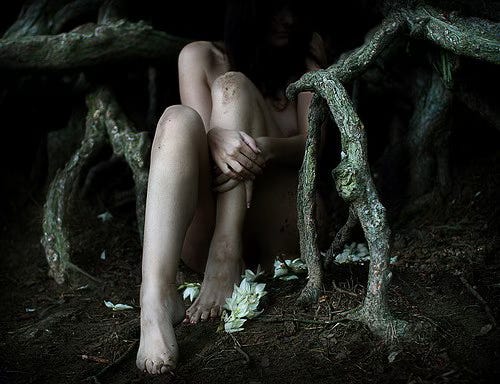
Image: unknown
God's imagination is the world, and out of that exuberant and terrifying mystery every food is produced for everything and everybody, yet it is our own imaginations that feed God as well. In the force field that is then created between the two imaginations of Gods and humans, Beauty lay in eternal suffering, giving constant birth to her child called Life. —Martin Prechte
Have you listened to the voices in your belly? Really listened to them? Beneath the surface hunger. The deeper hunger. The desire for life. The ravenous hunger for creation. The yellow snakes and blue butterflies transmuting and transforming, squirming and opening and closing, screaming, “sing! dance! create! write! or we will eat you!”
words are food. make a feast. have an orgy with them. eat them and eat them and eat them. nourish yourself with the pleasure of language.
let the wild in. write, create, dance, sing, paint, jump on the earth and make love like a barbarian.

Artist Unknown
If you don’t know the trees you may be lost in the forest, but if you don’t know the stories you may be lost in life. —Siberian Elder
if you were to take a snapshot of our human story today, what would you see? what does it look like to be awake inside of transition, inside of an old era dying and a new era being born. have we, as human beings ever NOT existed inside of this paradox?
it’s simultaneously messy and beautiful, terrifying and awesome to wake up inside the middle of the muddle of the human story of birth and death coexisting simultaneously as they always have and always will be.
messy and beautiful.
messy and beautiful.
messy and beautiful.
human dna has held the fantastic story of transition for hundreds, thousands, um, millions of years.
i personally want a new myth to express the mess and beauty of becoming human. how bout you?
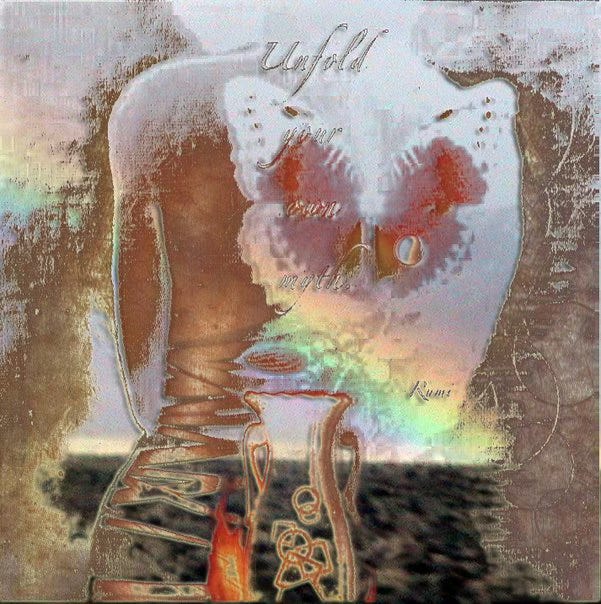
Artist: Stasha -photoshopped/sanddunes + magnet
People living deeply have no fear of death. —Anaïs Nin
According to Joseph Campbell the first function of myth is
to reconcile consciousness to the preconditions of its own existence –ie., to the nature of life or the monster of life. Therefore, the first myths we find are myths of denial, escape, retreat and renunciation.
The second function of myth is
to present an image of the cosmos that will maintain your sense of mystical awe and explain everything that you come into contact with in the universe around you.
Function three is
to validate and maintain a certain sociological system –a shared set of rights and wrongs on which you or your social system depends for its existence.
The final function of myth is psychological.
Who are you? Where are you? What is the meaning of life? The myth must carry the individual through the stages of life: birth, childhood, adolescence, maturation and death in a way that makes sense. The myth must do so in accordance with the social order of the group, the cosmos as understood by the group and the monstrous mystery.
what myth are you embodying right now? are you embodying your own myth?
maybe we are in the era of becoming human. embodying our human beingness. in all of its raw mess and beauty. my myth looks different than your myth because my tree roots speak differently than your tree roots. they are both messy and beautiful.
Art: Pinterest
A poet’s work is to name the unnameable, to point at frauds, to take sides, start arguments, shape the world, and stop it going to sleep. —Salman Rushdie
writing puts you in touch with your inner elder. the deeper you travel, the wiser the words.
I think that for the poet, the poem is god in that the poem has a creative intelligence. The poet creates and is created through the act of writing. If you have a pen and paper, you have a very inexpensive tool for exploring the transformative & subtle power of your own unique inner mystic.
follow the story to its center. discover ruins. transform them into treasures.
Roots. I discovered something uncomfortable about myself the other day, a place where I was asleep, a dark area of my psyche that I'd not shined much light on. Something I did not want to be awake to. Something old and something that came from years of subtle whisper lies that grew a dark forest inside of me. I wanted to be asleep inside this part of myself. and my ego was afraid to change. It was uncomfortable for me to see and experience this. However, as I embrace this...
Artist: Kindra Nikole
sometimes when we lose our rhythm
we think it is because we are ‘stuck’
sometimes it feels like ‘boredom’
or ‘i don’t know’
but you do know. you just may not know that you know.
so listen in and listen deep
find the spirit of your heartbeat
rattle around in your soul
till you find your spiritbeat truebeat naturalbeat
heartbeat rhythm. uniquely yours. strong and true.
Thirteen years later, I’m still following these truths. Still listening to the belly voices. Still wanting a new myth for the mess and beauty of becoming human.
This is why Rewilding Red exists. To write the myth of your becoming. To discover your ruins and transform them into treasures. To find your spiritbeat truebeat naturalbeat in a time when we desperately need our own rhythms.
13 weeks. Fairy tale wisdom. Embodied writing. StoryBody practice.
5 slots remain for women ready to dive in.
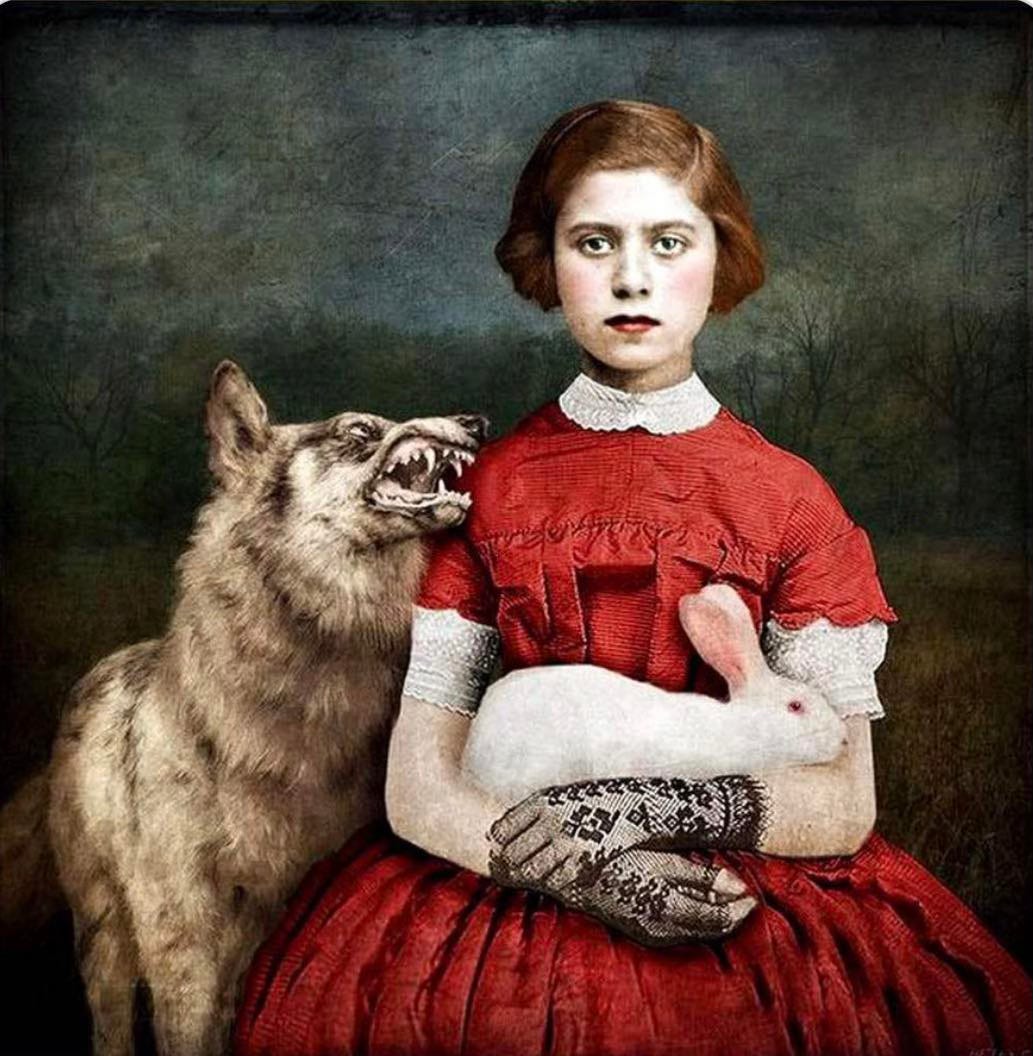
Artist: Beth Conklin
follow the story to its center.
discover ruins.
transform them into treasures.
sometimes the story takes you off the beaten path.
it guides your feet and pen to the cliffs and coves strewn with shards of shells.
when you least expect,
it leads you to the heart of your story.
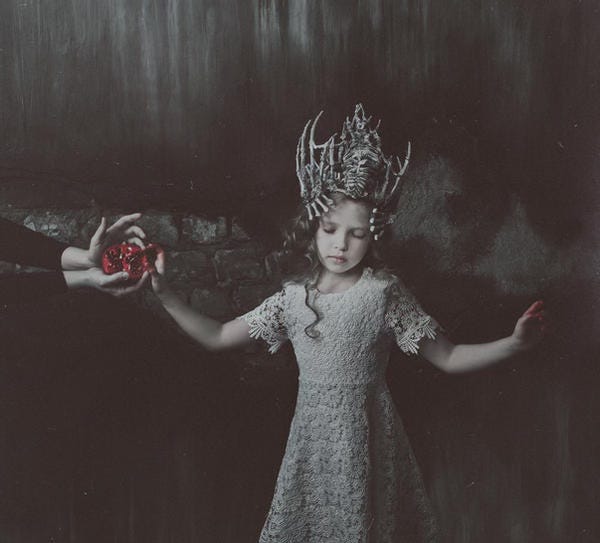
Artist: Natalia Drepina